Introduction
For overseas used car dealers, vehicle importers, rental companies, and fleet buyers, China has become an important sourcing market for passenger cars, SUVs, and practical fleet vehicles. The opportunity is clear: a large vehicle base, broad model selection, competitive supply, and improving export procedures. But importing used cars from China is not only about finding a low price. A reliable purchase depends on vehicle condition, document accuracy, export compliance, shipping arrangement, and communication with a supplier that understands international trade.
This guide explains the practical process of importing used cars from China. It is written for B2B buyers who need to evaluate suppliers, request stock lists, confirm vehicle condition, and prepare for shipment. The goal is not to make the process look easier than it is. The goal is to make each step clear enough for a dealer or importer to ask the right questions before placing an order.
ZHAOHANG AUTO works with overseas buyers who often ask similar questions: Can you provide inspection records? Which export documents are required? Can vehicles be shipped to my port? How do I confirm the model, mileage, condition, and available quantity? These are exactly the questions that should be answered before payment and shipment.

Why Buyers Import Used Cars from China
China's used vehicle export market is attractive because buyers can access a wide range of models, including sedans for urban transport, SUVs for family and mixed-road use, and practical models for rental fleets or dealer stock. For many markets in the Middle East, Africa, Eastern Europe, North Africa, and Southeast Asia, buyers are looking for vehicles that balance condition, price, fuel economy, and available parts support.
The strongest buyers are usually not one-time consumers. They are dealers, importers, fleet operators, trading companies, and project buyers. Their purchase decision is based on repeatability: whether the supplier can provide stable stock, transparent vehicle information, and export support over multiple orders.
Step 1: Define Your Market Requirements
Before asking for a quote, buyers should prepare a simple requirement sheet. This helps the supplier recommend suitable vehicles and avoid mismatched stock.
Important requirement points include:
- Destination country and port
- Target vehicle type: sedan, SUV, MPV, pickup, or mixed stock
- Fuel type and transmission preference
- Steering side requirement
- Target price range
- Model year or registration year range
- Maximum mileage range
- Quantity required
- Required inspection level
- Whether the buyer needs shipping, customs support, or only FOB quotation
For example, a used car dealer in West Africa may prioritize sedans with simple maintenance and competitive pricing. A rental company in the Gulf may prefer newer sedans and SUVs with clean interior condition, automatic transmission, and reliable air conditioning. A project buyer may need uniform vehicles with consistent specification and documentation.
Step 2: Request a Current Stock List
Used car availability changes quickly. A static product page is useful for understanding model categories, but serious procurement should start with a current stock list. The stock list should include model name, year, mileage, color, engine, transmission, vehicle photos, and quotation basis.
Buyers should avoid making decisions based only on one exterior photo. A professional supplier should be able to provide multiple angles and condition notes, especially for B2B orders.
Step 3: Confirm Vehicle Condition
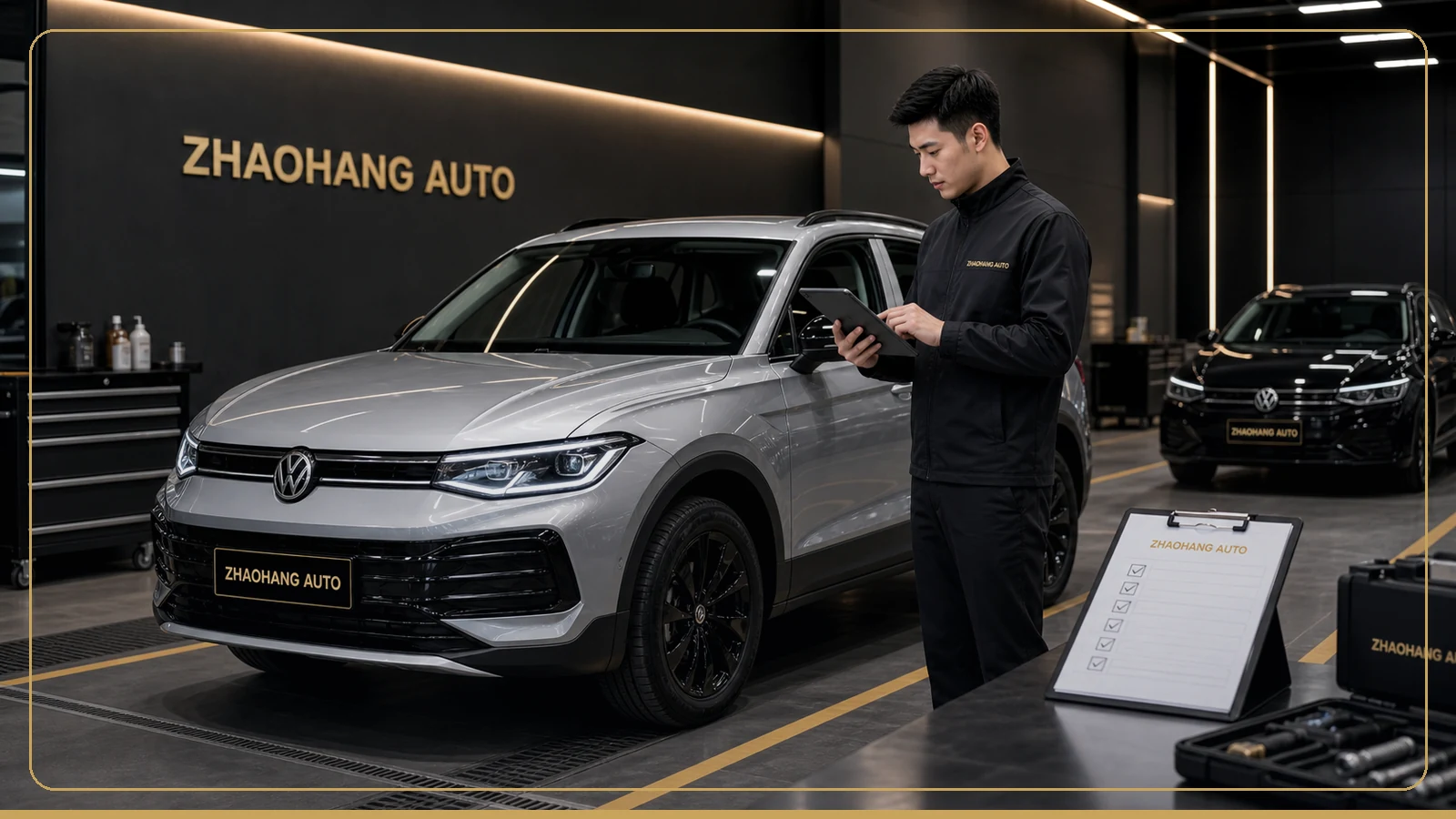
Vehicle condition is the core of used car sourcing. A practical inspection should cover exterior, interior, engine bay, chassis, tires, lights, electronic functions, air conditioning, and driving-related checks where possible.
For export buyers, inspection is not only a quality step. It is also a communication step. A buyer cannot stand beside the vehicle in China, so the supplier must translate physical condition into clear evidence: photos, videos, checklist notes, and explanation of any visible wear.
Common inspection points include:
- Exterior paint, dents, scratches, and panel alignment
- Interior wear, seat condition, dashboard function, and odor
- Engine start condition and abnormal noise check
- Brake, steering, lights, and basic electrical function
- Tire tread and wheel condition
- Undercarriage visible condition
- Odometer and vehicle identification information
For higher-value vehicles or bulk orders, buyers can request a third-party inspection report where appropriate. This adds cost, but it can reduce uncertainty for first orders.
Step 4: Confirm Export Documentation
Used car export is documentation-heavy. The exact documents may depend on destination country, port, customs requirements, and supplier structure. However, buyers should always ask the supplier to explain what documents will be provided and when.
Typical documents may include:
- Commercial invoice
- Packing list or vehicle list
- Sales contract
- Export declaration documents
- Vehicle registration or deregistration-related documents where applicable
- Product inspection report where required
- Bill of lading after shipment
- Other destination-specific documents requested by the buyer
In China, used vehicle export procedures have become more standardized. Buyers should work with suppliers who understand export licensing, vehicle transfer steps, inspection requirements, and customs declaration. Document consistency matters. Vehicle model, VIN, registration information, and export declaration details should match across the paperwork.

Step 5: Choose Quotation Terms
Common quotation terms include EXW, FOB, CIF, and CFR. For many overseas buyers, FOB or CIF is easier to compare.
FOB means the supplier is responsible for delivering the vehicle to the departure port and export clearance under agreed conditions. CIF usually includes sea freight and insurance to the destination port. However, local customs clearance, tax, port charges, and registration in the destination country are normally handled by the buyer or local agent.
Buyers should ask:
- Which port is used for shipment?
- Is the quotation FOB, CFR, or CIF?
- What is included and excluded?
- What is the estimated shipping schedule?
- Will vehicles be shipped by container, RoRo, or other method?
- Are port charges or inland transport included?
Step 6: Prepare for Shipping
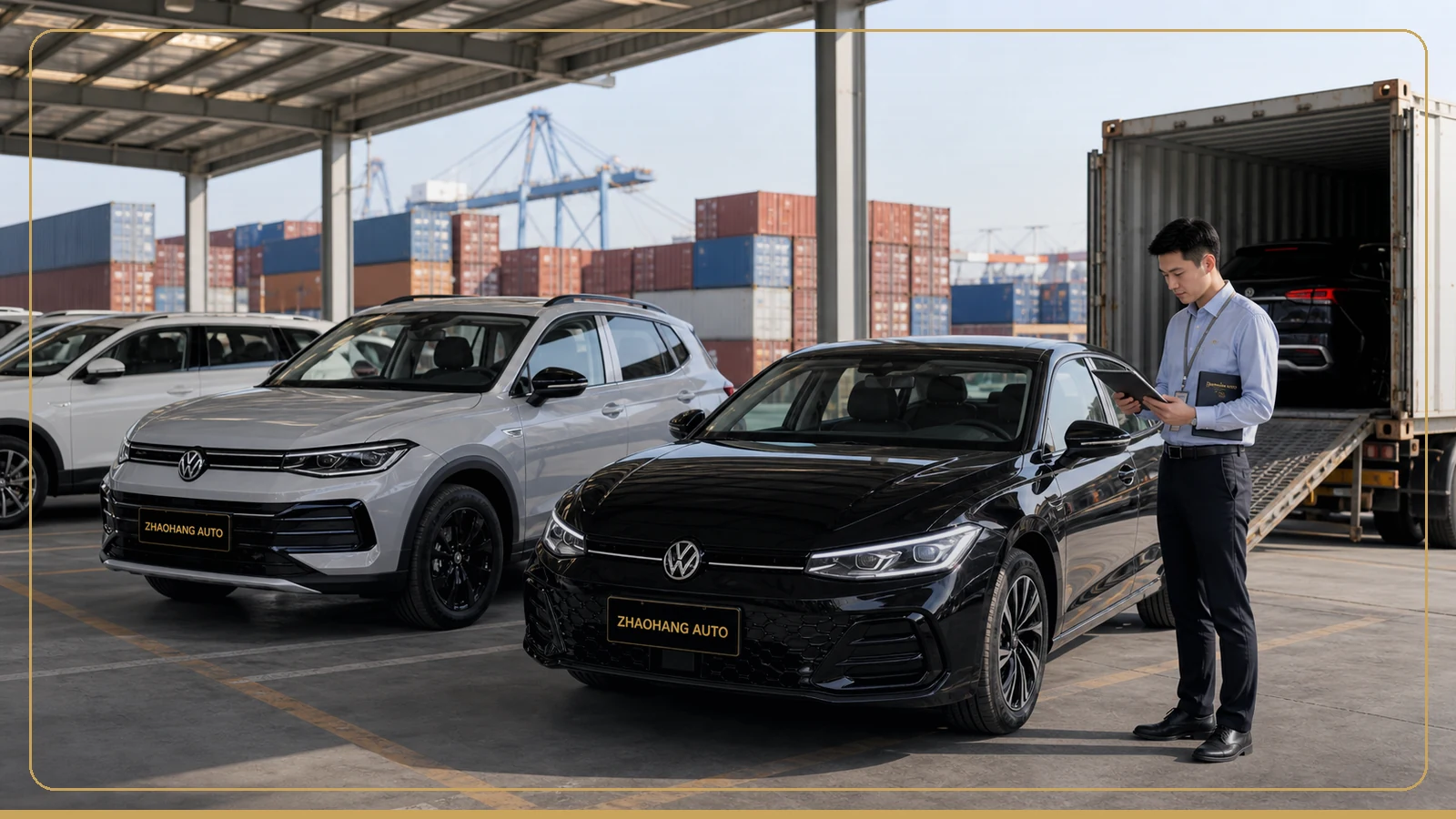
Shipping preparation includes vehicle cleaning, document checking, port delivery, export declaration, and loading. For B2B buyers, the key is communication. The supplier should update the buyer when the vehicle is confirmed, inspected, prepared, delivered to port, loaded, and shipped.
For container shipment, vehicles usually need careful loading preparation and battery/fuel handling according to shipping requirements. For RoRo shipment, the vehicle must be drivable and meet port requirements. The best option depends on destination, schedule, vehicle type, quantity, and cost.
Step 7: Plan Arrival and Local Clearance Before Shipment
Many import problems happen after the vehicle has already left China. A buyer may have selected the right model and received the shipping documents, but local port clearance can still be delayed if destination-side preparation is incomplete. Before shipment, overseas buyers should speak with their customs broker, freight forwarder, or import agent and confirm what is needed at the arrival port.
Important arrival questions include:
- Does the destination country allow this model year?
- Is there a maximum vehicle age limit?
- Are there emission or inspection requirements?
- Is left-hand drive or right-hand drive required?
- What taxes, duties, and port charges apply?
- Are translated documents required?
- Is pre-arrival filing needed?
- Who will receive the bill of lading and original documents?
This step is especially important for buyers importing into a market for the first time. China-side export support does not replace destination-side customs responsibility. A professional supplier can coordinate export and shipping from China, but the buyer should confirm local rules with local professionals.
Step 8: Build a Repeatable Procurement Workflow
For B2B buyers, one successful shipment is valuable, but a repeatable workflow is more valuable. Dealers and fleet buyers should record each order's model, condition, cost, shipping time, document timeline, and local resale result. This turns sourcing from a one-time purchase into a controlled procurement system.
A practical workflow may include:
- Monthly stock request from the supplier.
- Shortlist vehicles by market demand and budget.
- Request inspection photos and condition notes.
- Confirm quotation terms and included services.
- Review documents before shipment.
- Track shipping and arrival.
- Record resale feedback or fleet operating feedback.
Over time, this helps buyers understand which vehicle types perform best in their market. For example, a dealer may find that compact sedans sell quickly in city markets, while compact SUVs create higher margin in family-oriented segments. A rental company may discover that a more consistent model mix reduces maintenance complexity.
Common Buyer Mistakes
Choosing Only by Price
The cheapest vehicle is not always the best export vehicle. Poor condition, unclear documents, or unsuitable specifications can create higher costs after arrival.
Not Confirming Destination Rules
Each market has its own import rules. Buyers should confirm age limits, emission rules, steering requirements, taxes, inspection rules, and registration requirements in their own country.
Ignoring Document Consistency
Small document inconsistencies can delay customs clearance. VIN, model, quantity, invoice details, and shipping documents should be reviewed carefully.
Not Asking for Enough Photos
For first orders, buyers should request sufficient photos and videos. A transparent supplier should not avoid condition questions.
Forgetting to Clarify Reconditioning Expectations
Some buyers expect vehicles to be fully reconditioned before export, while others prefer to handle cleaning or minor work after arrival to control cost. Both approaches can be reasonable, but they must be discussed before confirmation. If the buyer expects polishing, interior cleaning, tire replacement, battery check, or small repair work, this should be written into the order discussion.
Used cars are not identical products. Two vehicles of the same model and year may have different wear conditions. Clear reconditioning expectations reduce disagreement and help the supplier prepare realistic pricing.
How to Evaluate a Used Car Export Supplier
When comparing suppliers, buyers should look beyond price lists. A serious used car export supplier should be able to explain sourcing channels, inspection steps, documentation support, and shipping communication. The supplier should also be careful with promises. Statements such as "perfect condition" or "no risk" are not realistic in used vehicle trade.
Better supplier signals include:
- Clear product photos and condition descriptions
- Practical explanation of export documents
- Fast response to requirement details
- Understanding of FOB, CFR, and CIF quotation differences
- Willingness to discuss inspection scope
- Transparent communication about stock availability
- No pressure to pay before basic questions are answered
The best supplier relationship is not a one-time price negotiation. It is a communication system that helps the buyer make repeat purchasing decisions with lower uncertainty.
FAQ
Can ZHAOHANG AUTO provide inspection information?
Yes. Buyers can request vehicle photos, videos, condition notes, and available inspection support before confirming an order.
Can you support export documents and customs procedures?
ZHAOHANG AUTO supports compliant export procedures and documentation coordination from China. Destination customs clearance should be confirmed with the buyer's local agent.
Can you arrange shipping to my country?
Shipping support can be discussed based on destination country, port, vehicle type, and quantity. Buyers can request FOB, CFR, or CIF quotation where available.
How do I get the latest stock and price?
Send your destination country, target model, quantity, and preferred vehicle condition. Stock changes quickly, so a current list is more reliable than an old catalog.
Do you support bulk purchase orders?
Yes. Bulk requirements can be discussed based on stock availability, model consistency, shipping schedule, and documentation preparation.
Conclusion
Importing used cars from China can be a practical sourcing strategy for overseas dealers, importers, rental companies, and fleet buyers. The key is not only price. Buyers should evaluate vehicle condition, supplier transparency, export documents, shipping terms, and after-sales communication. A good supplier helps reduce uncertainty before the vehicle leaves China.
For B2B buyers, the best first step is simple: define your market requirement and request a current stock list. From there, supplier comparison becomes much clearer.